Uganda’s tea sector stands at a crossroads while 15 brands traded above the coveted $1 (approx. sh3,650 per kilogram) mark during Sale 27 at the Mombasa Tea Auction, farmers across the country are sounding alarm bells over what they describe as a systemic collapse of the industry, driven by price instability, poor government support, and a lack of regulatory oversight.
The Sale 27 average price fetched by 43 Ugandan brands was $0.96 per kilogram, according to a July 9, 2025, report by Tea Brokers East Africa Limited—barely a lifeline for smallholder farmers grappling with plunging farm-gate prices and rising input costs.
“Prices have dropped. What is happening?” lamented Patricia Joylin Buhenga Namara, a concerned stakeholder.
“This is not just about auction prices. This is about livelihoods, about whether our people can continue growing tea or must abandon their gardens altogether,” she added.
A mixed bag
Despite the gloomy sentiment, Sale 27 marked a slight improvement in the number of Ugandan brands fetching premium prices.
Fifteen brands crossed the $1 threshold, up from 13 in Sale 26. Kabale led the way, selling at $1.20, followed closely by Kayonza at $1.17 and Kyamuhunga at $1.13.
These figures mirrored strong performances from Sale 26, where Kabale, Kayonza, and Bwindi led with $1.16, $1.14, and $1.12, respectively.
Yet, the average price has remained stubbornly low—$0.96 in both Sale 26 and 27, signaling stagnation despite isolated gains.
This stagnation reflects a longer-term trend. Sale 22 attracted an average $1.01 across 46 brands, Sale 23: $0.99 across 37 brands, Sale 24: $0.99 across 42 brands and Sale 25: $0.96 across 39 brands.
Farmers voice frustration, demand accountability
On the ground, tea farmers are less impressed by the occasional auction wins. They say the sector is in free fall—citing inconsistent prices, policy inertia, and dwindling political will to act.
“Unless the government gets an interest in the tea sector, we shall not pick anything from our efforts,” said Esther Ashaba, echoing frustration among rural growers.
She lamented, “How can Rwanda and Kenya be jubilating in tea while we remain yawning in Uganda?”
Jimmy Mugisa pointed to bureaucratic delays in implementing the long-awaited national tea policy, questioning why it remains stuck in draft form.

“The NRM government lost interest in tea. It’s time we react by sending people-centered representatives to Parliament,” Mugisa said, further noting, “Let’s find out who is sitting on this document and why.”
Dick Dunstan Turinawe, a respected voice in the sector, stressed that tea quality is heavily reliant on fertiliser access and regulatory oversight.
“The tea industry should be treated as a public good,” Turinawe said.
He said, “Without a regulatory framework, it’s like a football match without a referee. Quality drops, and with it, prices. Rwanda’s tea earns four times more than ours. Why?” he criticised political leaders for failing to champion reforms.
“This is a call for accountability. Tea is an economic lifeline for western Uganda. What’s the agenda of our new representatives regarding this sector?”
A sector on life support
The financial reality for most smallholder farmers is dire. The farm-gate price of green leaf has tumbled from sh250 per kilogram in October 2024 to just sh120 today.
“How do you survive on that?” asked Monday Robertson Joshua, noting that “The remaining farmers need to be mobilised. Let’s strengthen village structures before it’s too late.”
Rev. Baker Magaragariho, an agronomist and chairperson of Rubirizi Tea Growers Association, suggested five urgent steps:
Organize demonstrations to get the government’s attention.
Demand better quality-sharing terms from factories.
Encourage those who find the business unviable to exit but avoid switching to environmentally harmful alternatives like sugarcane.
Support specialty tea processing for those who can afford small machinery.
Focus on diversifying incomes, but with caution.
“Factories take the lion’s share of profits while farmers cry,” Magaragariho observed, noting that “And if UTOA cannot mobilise for collective action, let’s not expect any government attention.”
Fertiliser subsidy: A glimmer of hope
After years of lobbying, the government has finally released the long-promised fertiliser subsidy for tea. The Uganda Tea Outgrowers Association (UTOA) announced the funds are now being allocated, with the storage and supply chain set for the September 2025 season.
“I take this opportunity to thank you all for your persistence in keeping this sector vibrant,” said Dr Apollo Buzaare in an announcement to tea farmers.
“The government has released the subsidy—we are working out the logistics now,” he said.
While welcome news, many farmers remain skeptical about distribution delays and potential mismanagement.
“Fertilisers are crucial,” said Turinawe.
“If we each get fertiliser for just one season, we can rejuvenate our gardens. But implementation is key,” he noted.
Kenya’s advantage and Uganda’s missed opportunities
Uganda’s tea sector has long been overshadowed by its regional peers—particularly Kenya, where the Kenya Tea Development Agency (KTDA) dominates the Mombasa auction with high volumes and strategic marketing.
“KTDA’s presence creates downward pressure on our prices,” said Victoria Ashabahebwa, Chairperson of the Uganda Tea Association (UTA), who further noted that “Their high volumes give them influence. Uganda urgently needs targeted structural interventions.”
She noted that Uganda is improving on factory-level quality, but the market remains fragile.
“Our temporary gains won’t last without improved volume, branding, and market diversification,” she cautioned. “The removal of old teas helped, but this isn’t a strategy—it’s reactionary.”
The shift to specialty teas
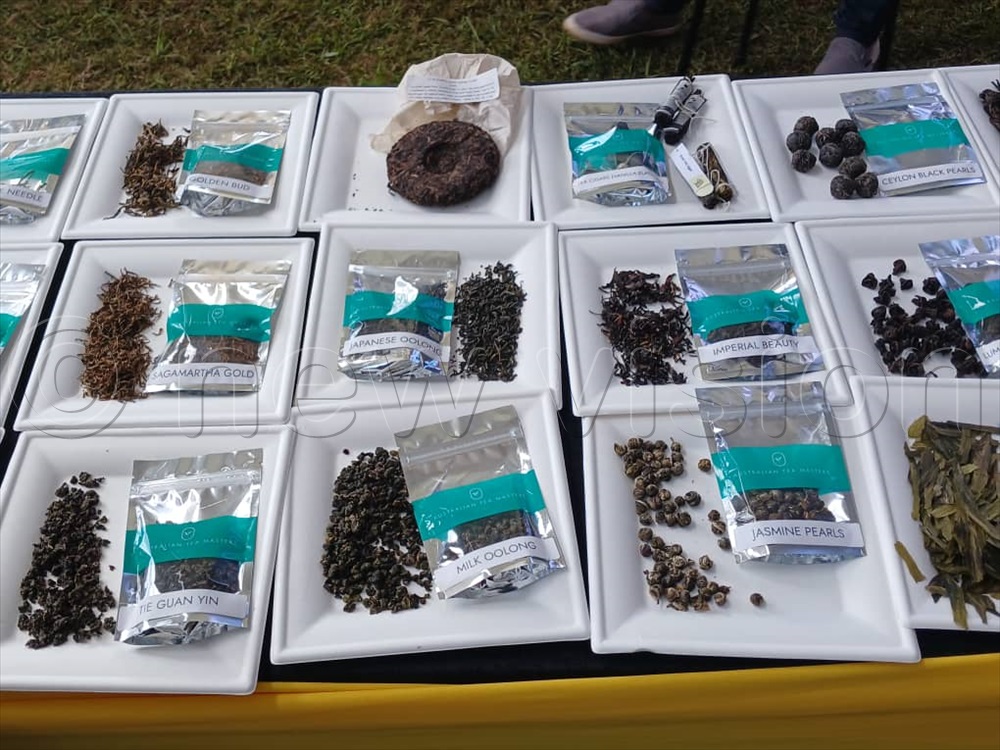
As global markets pivot from black tea to specialty teas—such as green, herbal, and organically grown varieties—Uganda is being urged to follow suit.
“There is a global demand shift,” said Kennedy Rwaboona, a seasoned tea farmer from Rukiga District. He noted, “We must innovate or be left behind.”
Rwaboona advocates for small-scale specialty processing units, branding innovation, and tapping into premium markets across Europe, Asia, and North America.
She emphasised that “Processed teas fetch better prices. Kenya realised that. We must too. Let’s invest in value addition, not raw exports.”