Uganda’s food systems face significant gaps in financing and investment, particularly for small and medium-sized enterprises and agricultural value chains.
The scale of investment required to ensure sustainable agri-food systems transformation expenditures averaging 12.6% of GDP while development expenditures will average 8.0%.
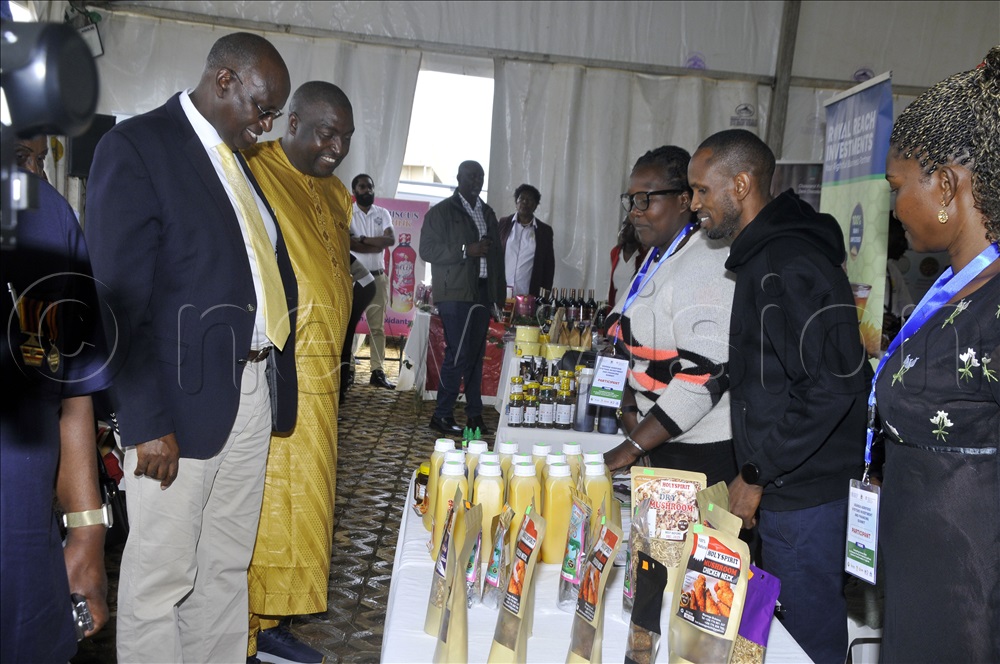
This is revealed in a report titled Uganda Food Systems and Financing Strategy, which was discussed during the Uganda Agrifood Systems Investment and Financing Summit, held recently at the Uganda Industrial Research Institute in Kampala.
The summit, organised by the African Agri-business Incubators Network (AAIN) was attended by stakeholders across the agriculture sector.
“Investments in agricultural value chain development are still far below the requirement. The MTEF and Ideal Budget scenarios represent about 56% and 73% of the real investment requirement. Against the CAADP commitments of 10%, the Ideal and MTEF budget scenarios averaged 5.1% and 3.9% respectively,” the report said.
The report further pointed out that funding for agricultural research is insufficient, because the government is allocating a small percentage of the national budget and GDP. The current allocation is estimated to be around 0.01% of the national budget. During the 2025/26 budget, sh1.89trillion was allocated to agriculture out of a sh72trillion national budget.
“An ideal allocation of GDP for agricultural research in Uganda should aim for at least 1% of the national budget, with some sources suggesting a target of 2% or more. Funding relies heavily on donor support, creating instability,” the report says.
Low funding means that services like extension are not effective. The current extension worker-to-farmer ratio is significantly lower than recommended, hindering effective service delivery and impacting agricultural productivity. The FAO recommended ratio of 1 extension worker to 500 farmers, Uganda’s ratio is much higher, typically ranging from 1:1500 to 1:2500.
“Because of this, Ugandan food systems do not generate fair economic returns for most of its small-scale, informal actors, who dominate the system, as well as the economy, limiting private sector investment,” the report says.
The report explains that apart from budgetary appropriation to direct public investment in development projects, a significant proportion of development expenditure is channelled through directed agricultural credit and wealth creation programmes relying on subsidised government funds, donor resources, or concessionary loans from other financial institutions.
The report further explained that domestic banking credit for agriculture production accounts for only 2.8% of the agriculture GDP, and just 6.3% of small-scale agribusiness companies have access to a loan or line of credit.
Commercial bank lending to the agricultural sector in 2023 was 21.5% of the total loan portfolio, with manufacturing averaging 16.9% and trade 17.3%. 1.9 Cost of inaction.
“If agri-food systems are to achieve their obvious potential, funding must be improved not only by government but also by commercial financial lending institutions. This will spur further investments, create jobs and improve food security,” Professor Alex Ariho, Chief Executive Officer AAIN said.
LEAD PHOTO CAPTION: Bright Rwamirama, the State minister for agriculture inspects stalls at Uganda Agrifood system Investment and financing summit, Namanve on June 24, 2025. (Photo by Wilfred Sanya)