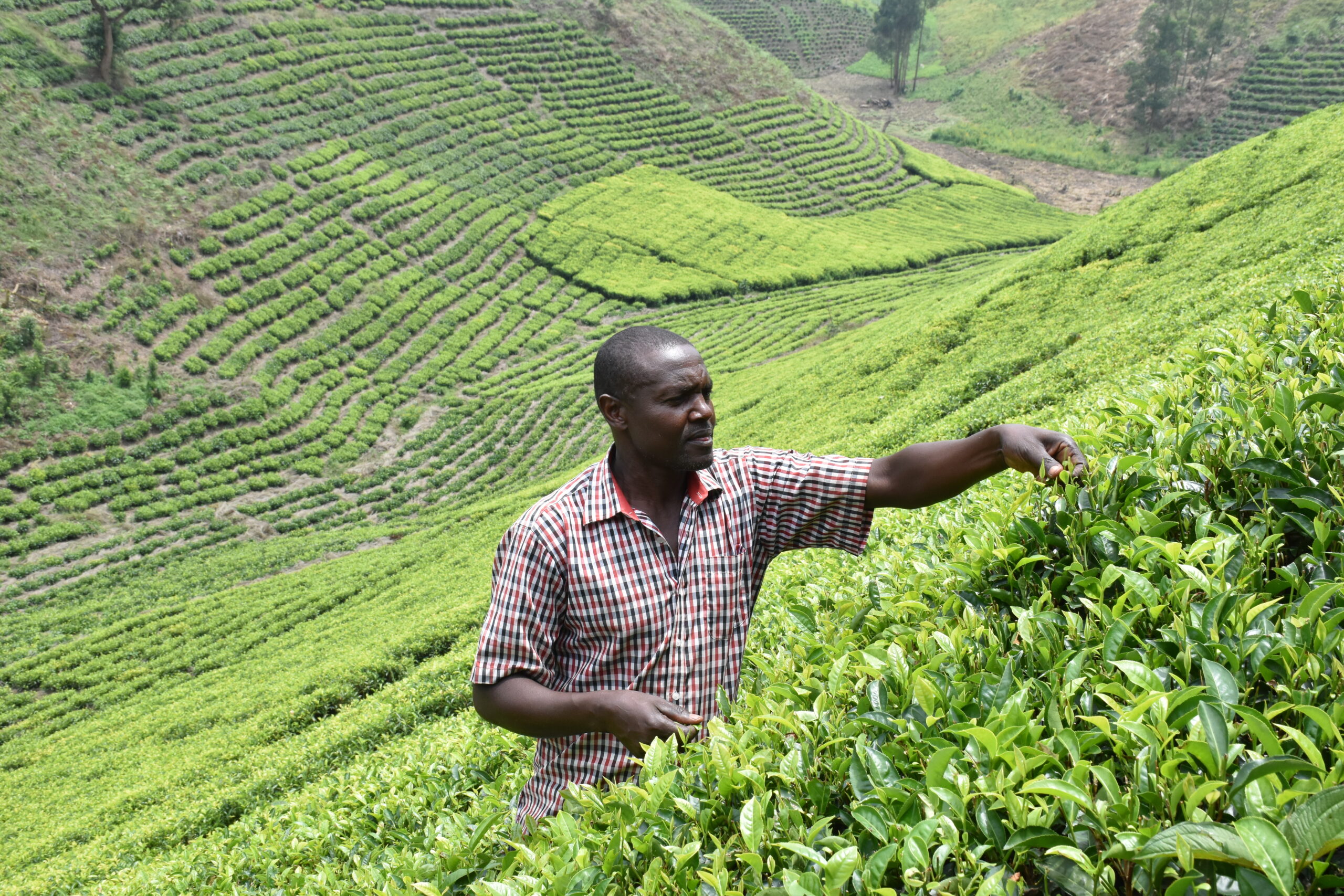
Despite a flicker of good news at the Mombasa Tea Auction—where 14 Ugandan tea brands crossed the $1 per kilogram mark—farmers and sector experts say the country’s tea industry remains on life support, battered by poor pricing, weak policy enforcement, and fertiliser shortages.
During Sale 28 at the Mombasa Tea Auction, premium Ugandan brands Bwindi, Kyamuhunga, and Kisoro topped the charts, trading at $1.26, $1.22, and $1.19 per kilogram, respectively. This placed them among the best performers in the East African tea market.
A report by Tea Brokers East Africa Limited released on Wednesday, July 16, 2025, revealed that only 14 of the 41 Ugandan brands offered at the auction sold for above $1.
The average price fetched by Ugandan teas was $0.97 per kilogram—a slight improvement from $0.96 recorded in the previous sale 27.
Positive auction trend, but long-term slump persists
In the preceding weeks, Uganda showed some resilience. Fifteen brands fetched above $1 in Sale 27—up from 13 in Sale 26.
Prices have hovered around similar levels, with high performers like Kabale, Kayonza, Kyamuhunga, and Bwindi trading between $1.12 and $1.20.
Yet, sector experts said these incremental auction wins mask deeper structural issues. The average hammer price has consistently failed to climb back to Sale 22’s peak of $1.01. Since then, sales have slumped to as low as $0.96, with each auction reflecting stagnation.
Farmers: “The sector is collapsing”
On the ground, optimism is in short supply. Farmers say the occasional high auction price doesn’t reflect their lived reality.
“Tea business in Uganda has suffered a steady slump for three years now,” said tea farmer Naboth Nuwagaba.
He noted that “With the Uganda average tea price at $0.90 and most factories incurring $1.10 as the cost of production, it’s likely that even the sh320 paid per kilogram of green leaf will be reduced.”
He warned that many tea plantations are abandoned or undernourished, largely due to the high cost and lack of fertiliser. “With this scenario, how do you expect our farmers to co-fund the fertiliser?” he said.
Esther Ashaba echoed these frustrations: “Unless the government gets an interest in the tea sector, we shall not pick anything from our efforts. How can Rwanda and Kenya be jubilating in tea while we remain yawning in Uganda?”
Jimmy Mugisa blamed bureaucratic inertia for the stalled National Tea Policy. “The NRM government lost interest in tea. It’s time we send people-centered representatives to Parliament. Let’s find out who is sitting on this document and why,” he said.
“No Referee in the Game”
Dick Dunstan Turinawe, a respected industry voice, said the tea sector urgently needs a proper regulatory framework.
“The tea industry should be treated as a public good,” he said.
Additionally, he noted, “Without a regulatory body, it’s like a football match without a referee—quality drops, and so do prices. Rwanda’s tea earns four times more than ours. Why?”
Turinawe believes political leadership has failed the industry and called for clear reform priorities.
“This is a call for accountability. Tea is an economic lifeline for western Uganda. What’s the agenda of our new representatives regarding this sector?”, he said.
Income collapse, growing despair
The farm-gate price for green leaf has plummeted from sh250 per kilogram in October 2024 to just about sh120 today.
“How do you survive on that?” asked Monday Robertson Joshua. “The remaining farmers need to be mobilised. Let’s strengthen village structures before it’s too late.”
Rev. Baker Magaragariho, chairperson of the Rubirizi Tea Growers Association, proposed five urgent interventions:
Organise peaceful demonstrations to capture government attention.
Negotiate improved factory contracts, especially on quality-based pay.
Discourage farmers from converting plantations to environmentally harmful alternatives like sugarcane.
Encourage small-scale specialty tea processing for higher-value exports.
Support income diversification, but cautiously and strategically.
“Factories take the lion’s share while farmers cry,” Magaragariho said. “And if the Uganda Tea Outgrowers Association (UTOA) can’t mobilise collective action, we can’t expect government to step in.”
Fertiliser subsidy finally released
After years of pressure, the government has finally approved a fertilizer subsidy for tea farmers. The Uganda Tea Outgrowers Association (UTOA) confirmed that logistics are being finalised for the September 2025 planting season.
“I take this opportunity to thank you all for your persistence,” said Dr. Apollo Buzaare in a communication to farmers. “The government has released the subsidy—we are working out the logistics now.”
However, skepticism lingers over the implementation.
“Fertilisers are crucial,” said Turinawe, and further noted, “If we each get fertiliser for just one season, we can rejuvenate our gardens. But implementation is key.”
Kenya’s strategic edge
Uganda’s struggles are made worse by Kenya’s dominance at the Mombasa auction. The Kenya Tea Development Agency (KTDA) wields significant influence due to its high volumes and strategic marketing.
“KTDA’s presence creates downward pressure on our prices,” said Victoria Ashabahebwa, Chairperson of the Uganda Tea Association. “Uganda urgently needs structural interventions. The removal of old teas helped, but that’s a temporary fix.”
Ashabahebwa emphasised the need for factory-level improvements, better branding, and market diversification. “Our temporary gains won’t last without strategic action,” she cautioned.
Global market shift: The Specialty tea opportunity
As global markets shift focus to specialty teas—such as green, herbal, and organic variants—Uganda is being urged to diversify away from traditional black tea.
“There is a global demand shift,” said Kennedy Rwaboona, a tea farmer in Rukiga District. “We must innovate or be left behind.”
He advocates for small-scale specialty processing units and exploring premium markets in Europe, Asia, and North America.
Ashabahebwa agrees. “Processed teas fetch better prices. Kenya realised that. We must too. Let’s invest in value addition, not raw exports.”
Farmers said that for now, Sale 28’s $1.26 victory may make headlines—but back in the villages, fields are drying, prices are tumbling, and patience is wearing thin.