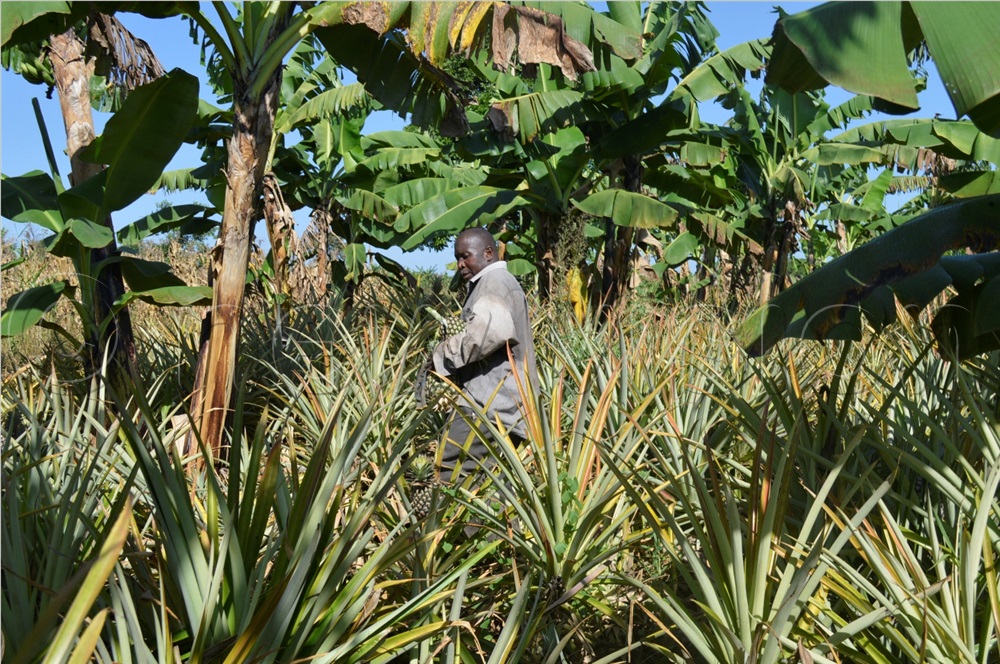
Pineapple farming is a key source of income for many farmers, but one persistent challenge they face is the wilting of the pineapple leaves.
This problem often begins with leaves curling, turning yellow, or drying out, clear signs that something is wrong. For many growers, such symptoms raise concerns about plant health and potential yield loss.
Understanding the root causes of leaf wilting is essential for farmers who want to protect their crops and maintain healthy, productive pineapple gardens.
Muhammad Kyazze, a pineapple farmer from Kamuli village in Kangulumira, says he first noticed the problem during the dry season.
“At first, I thought it was just the heat, but even after watering, the wilting persisted. That’s when I realised it could be more than just drought,” he says.
Kyazze later learned that poor soil nutrition and improper spacing contributed to the problem.
Jane Nayigaga, another farmer from Ndeeba village in Kayunga district, says pests and diseases are major culprits.
“I discovered mealybugs in the roots of some plants. They were sucking the sap and weakening the plants, leading to wilting,” she explains.
She now routinely checks her garden and applies organic pest control methods.
Hassan Serwadda, a commercial pineapple farmer from Nsiima village, blames waterlogging.
“Too much rain or poor drainage causes root rot, which results in leaf wilting,” he says.
He advises farmers to plant on raised beds and ensure proper spacing to prevent moisture buildup.
According to Henry Sekyewa, an agronomist, wilting is often a symptom of several underlying issues, poor soil, pests, diseases, drought stress, or overwatering.
“Farmers need to inspect their gardens regularly, test their soil, and apply the right nutrients,” he advises.
To prevent wilting, experts recommend proper land preparation, use of healthy suckers, pest control, and consistent garden monitoring. Healthy leaves mean healthy fruits, and a better harvest.