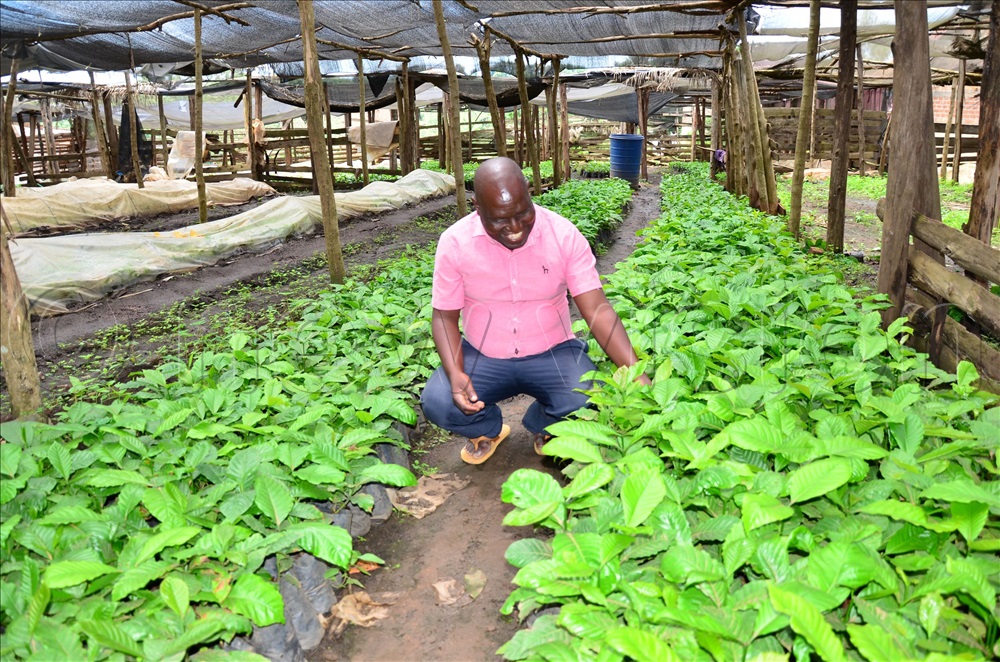
Coffee farming remains one of Uganda’s most profitable ventures, especially when done organically. But for organic coffee farming to be successful, everything starts with the seed.
Using high-quality, disease-free, and organically sourced seeds sets the foundation for healthy plants, high yields, and better prices in the organic market.
Paul Kayondo, a coffee farmer and resident of Kibanvu in Luwero district, says many farmers fail to achieve good harvests because they don’t pay enough attention to the seed selection process.
“You cannot expect to grow organic coffee using seeds whose source is unknown or that are mixed with chemical-treated varieties,” he warns.
He advises farmers to always go for certified organic seeds or to collect seeds from healthy mother plants grown organically for at least three years.
Yekosefati Sekabembe, a successful coffee farmer in Kiyunga village, Mubende, adds that good seeds should be selected from ripe, red cherries, which are then processed and dried naturally under clean conditions.
“After drying, the seeds must be carefully sorted, removing damaged, small, or discoloured beans,” he says.
Sekabembe stresses the importance of choosing varieties that are disease-resistant and well-adapted to the local environment.
Wilson Nkurunziza, a farmer in Kasambya, says before planting, he soaks the seeds in clean water and only uses those that sink, since they are heavier and healthier.
“Floating seeds are usually empty or weak,” he notes.
In organic coffee farming, every step counts, and it begins with seed selection. Farmers who take time to pick the right seeds avoid future problems like pests, low yields, and stunted growth.
Selecting the right seed is not just a beginning, it is a guarantee of long-term success in organic coffee production.