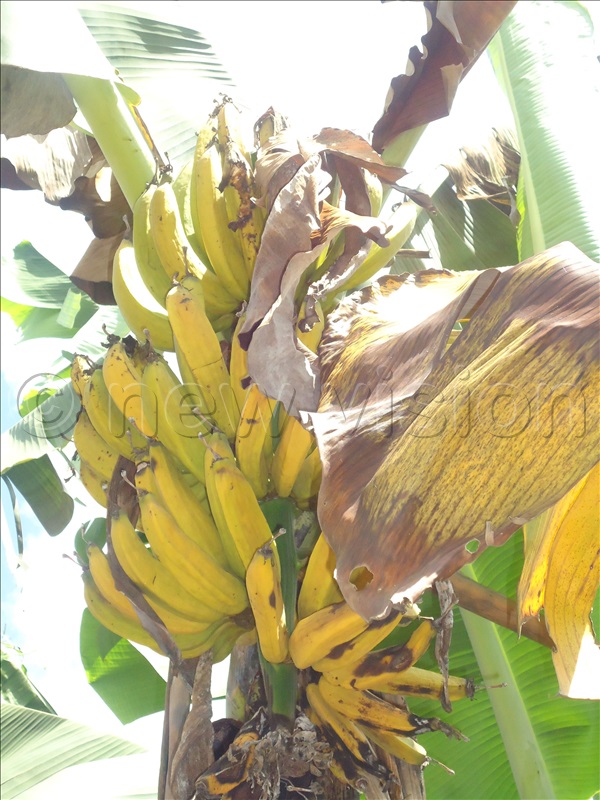
Banana wilt, also known as banana bacterial wilt (BBW), is a serious threat to banana production in Uganda. The disease is known for its rapid spread and devastating effects on entire plantations.
Farmers and traders alike are grappling with its consequences.
Sam Kasule, a matooke farmer in Semuto, Nakaseke district, says, “This season, I noticed something strange. Some banana leaves started wilting from the edges and turned yellow. In just a few days, some plantations have started to collapse. I later learnt it was banana wilt.”
According to Isaac Malinga, a banana grower, early signs include wilting and yellowing of the leaves, premature ripening of the fruits, and oozing of a yellowish bacterial liquid when the banana pseudostem or fruit is cut.
“You must be vigilant and inspect your garden regularly,” he advises.
Gideon Zakke, an agronomist, adds, “One of the most reliable signs is the bacterial ooze. If you cut the plant and see a milky or yellowish sticky substance, it’s likely banana wilt. Another key sign is the drying of young suckers and the collapse of the central shoot.”
Margaret Nakintu, a trader in Gayaza, says banana wilt can affect business.
“The fingers come out smaller, some rot before they ripen.”
Experts recommend uprooting infected plants and burying them deeply. Tools used in the infected gardens should be disinfected or used exclusively for that area to avoid spreading the bacteria.
Farmers should also avoid using suckers from infected gardens for planting.
Identifying the disease early and taking quick action can save entire plantations and protect livelihoods.