235
Time of harvesting
- Maize can be harvested according to the purpose or use. Generally, the maize cob should be harvested after full mature stage.
- The harvesting time is after the heavy rainfall stops (the husk should become dry, dark brownish, and the seed should also be dried on the cob of the standing plant in the field.
- At the time of harvesting, a black spot is seen in the bottom (side attached to the cob) of the seed. This black spot suggests it is ready for harvest.
- If the cob hangs a little bit more than before, it is time for harvest.
Post-harvest processing and storage
After harvest, maize grains should be further sorted in order to have good quality.
The following process should be followed:
Selection of maize after harvest
- Select cobs of equal size with thick husks.
- Remove rotten cob and those that are not completely covered with husk.
- Remove the cobs with too big and too small kernels (seeds).
- Remove the kernels from the top and bottom part of a cob to select uniform kernels as seed.
- Removed cobs or kernels (grain) should be used for food consumption, but not for seed.
Cleaning grains
- Seed cleaning is very necessary for quality seed production.
- While cleaning, remove weed seeds, dust, wrinkled seeds and seeds of other crops.
Winnowing fans
- The hand-operated and power-operated winnowing fans can be used for the purpose of cleaning threshed seeds.
- Generally, winnowing fans are available from agriculture machinery shops in urban areas.
Drying of grains
- Grains are dried out to lower the moisture level to keep the longevity of the seed.
- Excessive moisture in the seed may cause it to lose its viability soon, and may also be attacked by fungus.
- Properly dried seeds can be stored for a long time. Hence, the seeds are dried out several times in the sun before storage. If the seeds are sufficiently dried, the kernels will make a clinking sound when crushed.
Storage of maize grains
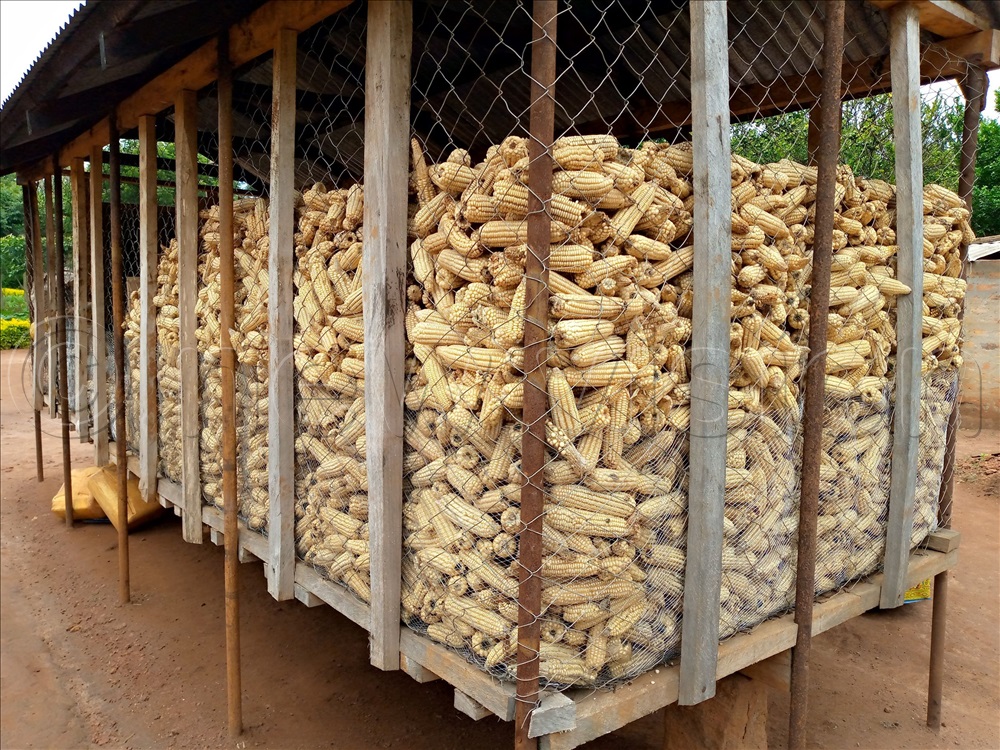
- The storage structure most protects the maize seeds from extreme heat or cold, and moisture, which causes microbial and fungal growth. The storage also should protect the seeds from pests and rodents, which eat or damage the seeds.
- Grains should be very carefully handled and stored without contamination from other varieties and other crop seeds.
- Grain storage refers to the act of keeping the seeds safe during the storage time until the seeds are sown or marketed.