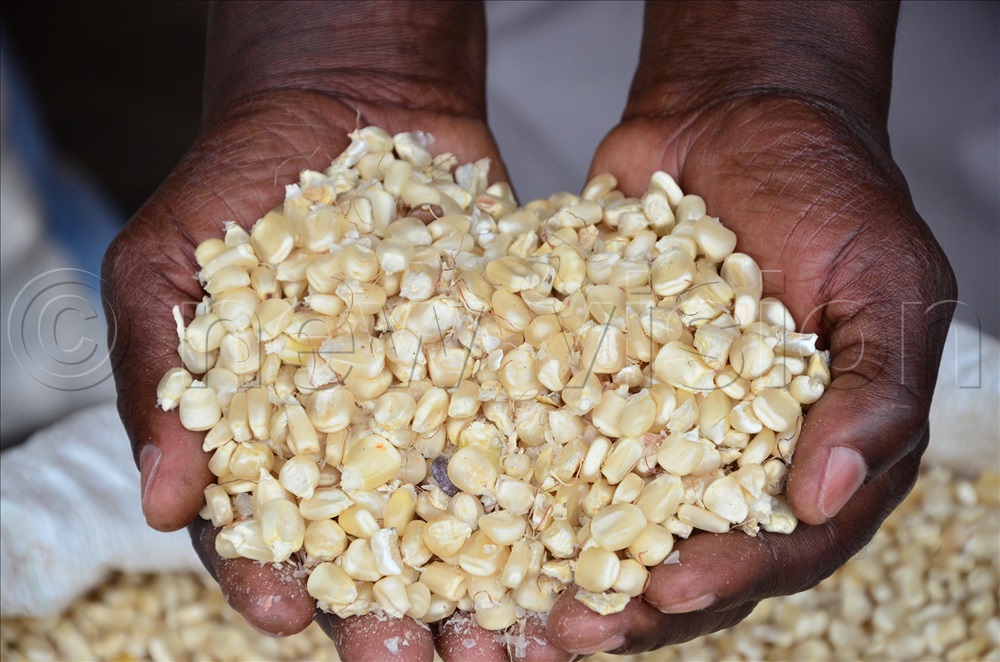
Are you a maize or soya farmer or dealer? Get ready to tap into a new market opportunity! Koudjis, a big player in animal feed production, is opening a new factory in Uganda and needs 200,000 tonnes of maize grain every year.
The factory, located in Njeru, Buikwe district, is set to be officially opened by President Yoweri Museveni in September.
Construction works have been ongoing since June 2022. With their headquarters in Netherlands, Koudjis, who are also sponsors of the Best Farmers Competition that is organised by Vision Group, produce feeds for poultry, fish, pigs and cattle.
They have been operating in Uganda for 13 years. Worldwide, Koudjis operates in over 70 other countries, employing a total of 14,000 workers.
Johan Verhoek, who works at Koudjis Nutrition BV, said the Ugandan factory is a response to a growing demand for livestock feeds in the country.
“There was obviously a very big potential in the market and this is why we brought the production process nearer to the market,” Verhoek said.
Geofrey Mukama, the technical sales manager at Koudjis, announced the opportunity for farmers during a grain buyer and supplier symposium organised by the Grain Council of Uganda in partnership with International Finance Corporation.
The symposium took place at Four Points by Sheraton Kampala, last Wednesday.
Mukama emphasised that poor-quality grain will not be tolerated. To back this up, he said the factory rejected 5,000 tonnes that had been supplied for trial in the past few months.
He added that following the symposium, he was sure of getting quality grain and the quantities required.
“The Jinja factory will maintain the same high standards as we have across the world. Therefore, the raw materials that we shall use must also be at that level,” Verhoek said.
Humphrey Mutaasa, the chief technical advisor of the Grain Council of Uganda, said the symposium was aimed at getting suppliers and buyers of certified grains together to agree on how to increase the uptake of processed grains in the country.
“The Grain Council of Uganda brought suppliers of certified and clean grain and have attained a Q mark to speak with the buyers of certified grains and grow the business of trading certified grains in the country,” Mutaasa said.
Maize is grown in most parts of the country, but most intensely in eastern (Kapchorwa, Mbale, Kamuli, Jinja, Iganga), central (Masaka, Mubende) and western (Masindi, Kamwenge, Kyenjojo, Kasese, Kabarole).
Over 90% of Uganda’s maize is produced by smallholders, of which about 60% is consumed on the farm, in form of roast, dried and milled to flour to make porridge and maize meal.
Maize production
In Uganda, maize is a staple cereal crop. It is versatile in use, that is, it can be eaten green, roasted or steamed to support livelihood of millions of smallholder farmers in Uganda.
According to the agriculture ministry data, Uganda produced about 5.2 million tonnes of maize in 2024, up from 4.6 million tonnes in 2022.