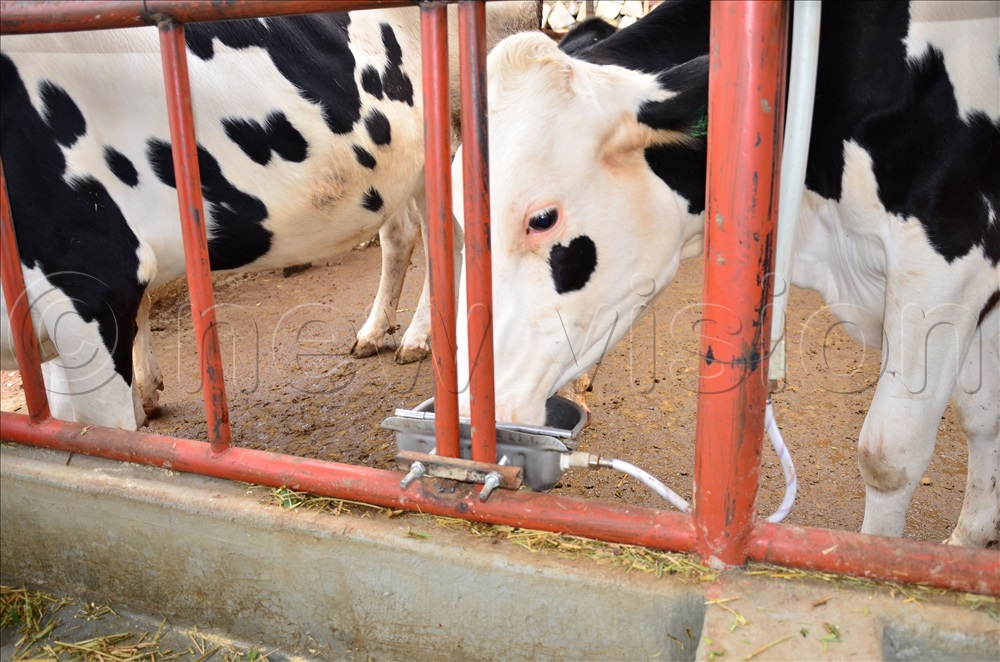
In zero-grazing systems, where cows are confined and fed in stalls rather than allowed to roam pastures, ensuring a consistent water supply is critical.
Hood Kiwana Kasirye, a dairy expert and director of Kasirye Breeders, explains that automatic drinkers are revolutionising how commercial farmers manage cow hydration.
“Water intake directly affects milk production, digestion, and overall health. Automatic drinkers provide clean, fresh water on demand, reducing stress and preventing dehydration, which can lower milk yield by up to 10–15% if neglected,” Kasirye explains.
These systems are equipped with float valves that maintain a constant water level, ensuring each cow has access without overcrowding. They also reduce labour costs, as farmers no longer need to manually fill troughs multiple times a day, freeing time for other farm management tasks.
Peter Mubiru, a veterinary doctor, adds that automatic drinkers improve hygiene and reduce disease risk.
“Standing water in open troughs can harbour bacteria and parasites. Automatic drinkers minimise contamination, lowering the chance of mastitis or gastrointestinal infections, which are common in zero-grazing setups,” he explains.
Kasirye notes that cows naturally drink 30–100 litres per day depending on age, lactation stage, and diet. By providing consistent access, farmers can optimise feed conversion, as well-hydrated cows digest silage, concentrates, and hay more efficiently.
For commercial dairy farmers, investing in automatic drinkers translates into healthier, more productive cows, higher milk yields, and safer, cleaner water management, a small technological step with a significant impact on profitability and herd wellbeing.