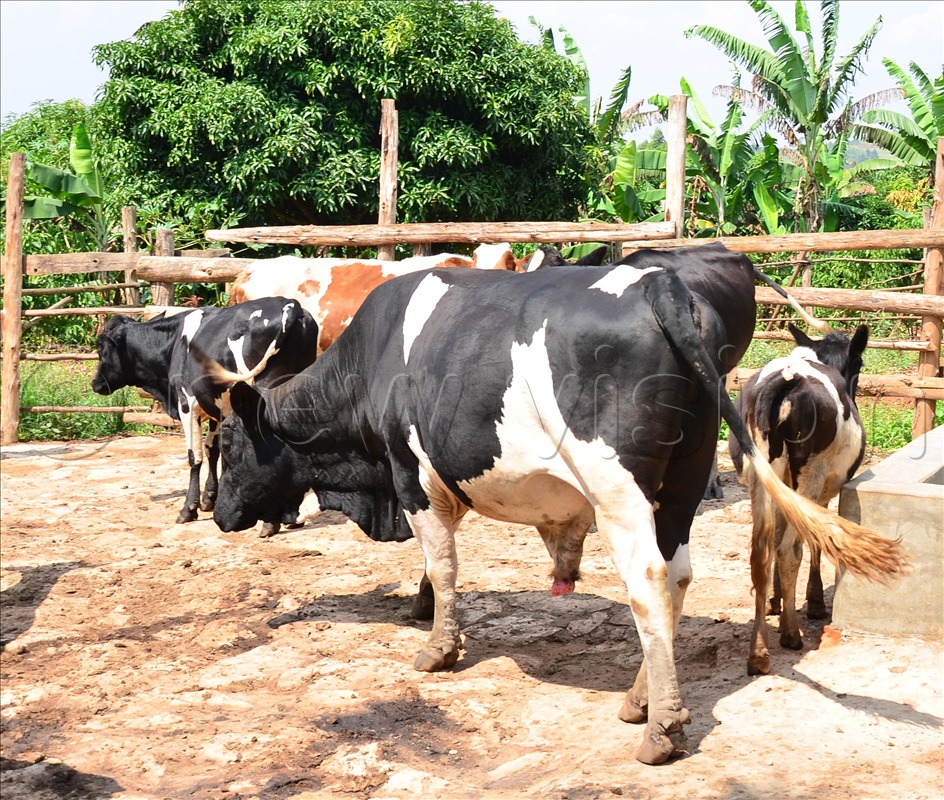
Many cattle farmers often ask: When is a bull too old to breed? The surprising answer is that, with proper care, a healthy bull can remain fertile and active in breeding for more than ten years.
Charles Kintu, a veterinary doctor, says that while bulls reach sexual maturity at around 18 months, their peak breeding performance is usually between 3 and 7 years.
“However,” he adds, “if the bull is well-fed, properly exercised, and free from diseases or injuries, it can continue breeding effectively even past the age of 10.”
The secret, according to Kintu, lies in regular veterinary checkups, a balanced diet rich in minerals like zinc and selenium, and avoiding overworking the bull.
“Just like human athletes, bulls need rest and care. If overused or neglected, they burn out faster,” he notes.
Samuel Nyabongo, the proprietor of Kimoome Mixed Farm, confirms this from experience. He has a 12-year-old bull that still serves well.
“We monitor his weight, ensure he has a clean shelter, and give him mineral supplements regularly,” he says.
Nyabongo also rotates his bulls to prevent exhaustion and injury, which contributes to their longevity in service.
He advises farmers not to rush to sell or slaughter older bulls. “If a bull still shows interest, mounts properly, and produces healthy calves, it’s still useful,” he explains.
While fertility may gradually reduce with age, especially after 10 years, experts agree that age alone is not the main factor. Health, nutrition, and workload management are key. With proper handling, bulls can remain reliable breeders well into their second decade, saving farmers the cost of early replacements.