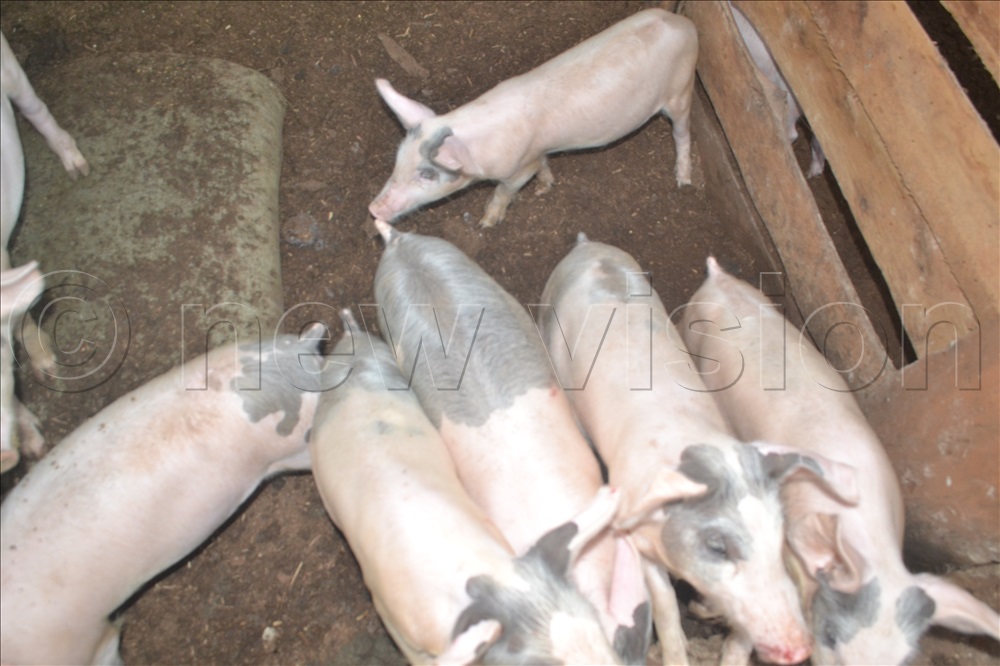
Due to the losses suffered by pig farmers countrywide due to African Swine Fever, the sector has come under difficult times in recent years.
According to the agriculture ministry and Uganda Bureau of Statistics (UBOS), the country has 7.1 million pigs.
UBOS indicates that the largest number of pigs is in Wakiso, Mukono and Bushenyi districts, as well as parts of Teso and Masaka.
The sector has been adversely affected by an outbreak of African Swine Fever which has been raging since 2022, destroying several farms. Hundreds of pigs, of all ages, have been killed.
“The first appearance of African Swine Fever in an area or farm is usually characterised by death of a many pigs after a short illness. Pigs become depressed and suddenly stop eating, huddle together and sometimes may die before other clinical signs develop,” says Dr Emma Naluyima, a veterinary doctor and pig farmer.
The infected pig spends most of its time lying down and has difficulty in breathing. Its skin is sore, particularly on the abdomen, with skin scratches developing in white-skinned pigs that survive for more than a day.
How it is spread, prevented
- Close contact between domestic and infected wild pigs.
- Introduction of infected pigs into a farm, for example, through purchase. The solution is not to buy pigs at the moment.
- Introduction of infected pork into the farm. Stop any of your workers from eating pork on or off the farm, which is an avenue to bring the virus into the farm.
- Feeding of pigs with leftover food that contains raw or infected pork and pigs’ remains, as well as access to such remains through scavenging. Farmers should not get any leftover foods from eateries, including those that do not sell pork directly.
- Movement of vehicles and people between farms during an outbreak. People can carry the virus on their clothing, shoes and equipment after contact with infected pigs or contaminated materials, hence infecting the pigs.
- Movement of stray dogs, scavengers and other animals between farms during an outbreak, because dogs may have eaten a piece of infected pork. Fence off your piggery to prevent this.
- Using equipment, for example pangas, knives and hoes from infected farms. African Swine Fever has the ability to exist on surfaces for several years.
Prioritise bio-security
Regardless of the size of the enterprise, bio-security is extremely important.
Bio-security is a set of practical measures taken to prevent entrance or manage the spread of infection in a pig farm.
It is two-pronged; guarding the farm from entry of disease-causing organisms and managing infection on the farm to prevent transmission to other pigs.
Ensuring effective bio-security calls for investment. For example, you need a perimeter fence to prevent entry of unauthorised personnel, animals and birds.
You also need to buy disinfectants and construct bathrooms for visitors to take a shower before accessing the sty.
The other measure is buying farm attire for both workers and authorised visitors. These must be situated at the entry before one accesses the piggery.
Large-scale farmers should provide separate houses for different categories of pigs e.g. pregnant sows, farrowing sows, growers etc.
Therefore, a written bio-security plan is important and with it, farm workers can easily implement bio-security measures with support of suggested structures.
Drafting a bio-security plan
- Land area used for pig production: Bio-security starts from selecting the site for construction of your pig farm. Who is your neighbour? Are you near a forest that is inhibited by wild pigs? Are you near an abattoir, a pork joint or pork selling restaurant? A pig farm must be isolated from people and possibly set in a location free from other pig producers. If your neighbourhood has all the swine fever causative factors, your bio-security programme will be costly, because the threat is real and not speculative.
Management: This is about strategies to avoid infections from being transferred from one pig unit to another. On such farms, it is necessary to provide a manager for each pig category because this helps ease control of movements from one house to the other. For example, farrowing, grower and dry sow unit managers. These must always go through a bio-security check before crossing to other units. This means, also equipment from one unit does not cross to the other. In small and medium productions, one must refrain from borrowing farm equipment, drugs, syringes and needles etc. Sick pigs must be isolated and newly introduced pigs quarantined for at least two weeks before mixing with others.
- Pig transportation: Due to the absence of professional pig transporters in the country, trucks used for transporting breeding pigs are the same used for slaughter pigs. Even during an outbreak, this doesn’t change. Also, if unsupervised, transporters park near high-risk places, for example, pork joints to have meals. It is your responsibility as a farmer to source and interview the transporter of your breeding pigs, make sure the truck is disinfected and the route of movement is followed with no unnecessary stopovers until final destination. When stopped at any Police check point, request the officers not to get in contact with pigs. Also, endeavour to move pigs with necessary documents to avoid delays at check points.
No treatment
Noteworthy is that African Swine Fever has neither a vaccine nor treatment, therefore controlling its spread is the only option.
The writer is an agriprenuer and pig keeping consultant. Additional reporting by Joshua Kato.