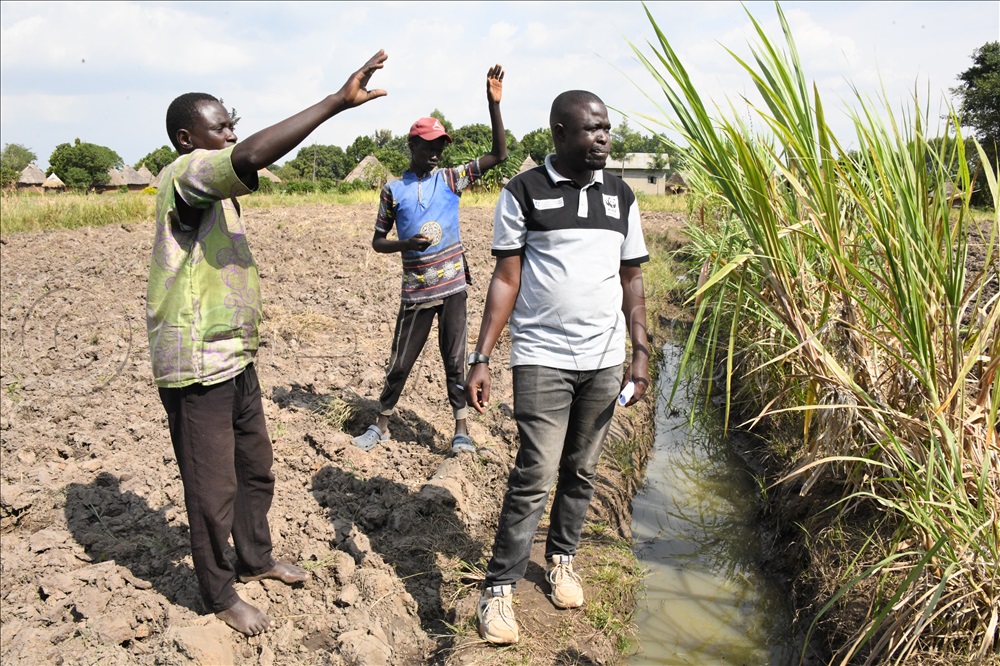
With the second rainy season already experienced in different parts of the country, farmers in flood-prone areas have been advised to embrace flood control trenches.
These will reduce the speed of water, retain soil fertility and also save water for use during the dry season.
According to Godfrey Okiror, the project officer at World Wildlife Fund (WWF), flood control trenches should also have infiltration pits. On top of these trenches, farmers should plant Nappier grass to stabilise the soil, but also save it for animal feeds.
Okiro sounded the advice recently during a field visit to flood-prone and landslide areas in Teso and Elgon regions to check the impact of their interventions on the community.
“Such that when water comes, it is first trapped in the trenches that have been positioned five meters apart on a piece of land that is more than 15 acres. When water laps one trench, it’s trapped by another. In the process, the speed keeps reducing and eventually flooding,” Okiror added.

He explained that intervention is part of the many initiatives his organisation is implementing on behalf of the Ministry of Water and Environment through the Integrated Water Management Development Project.
He added that the project’s aim of restoring part of Awoja river is because the surroundings of Awoja River catchment have been degraded, its surroundings have become prone to destructive floods, which have also affected the water quality in its catchment area.
Additional information from the Food and Agriculture Organisation (FAO) advises that for one to dig up the trenches, these should be 2.5 meters wide, 1.5 meters deep, and 40 meters long.