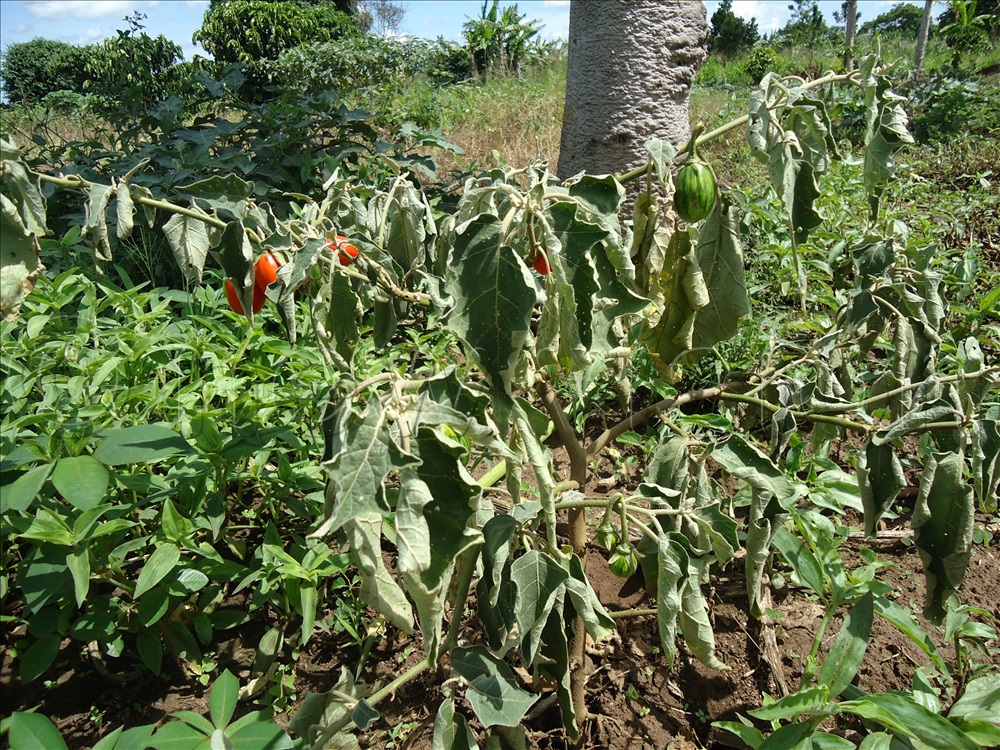
Cream bulbs, commonly known as entula or green oval vegetables, are not only a household favourite in kitchens but also a dependable income-generating crop for smallholder farmers.
However, this crop is vulnerable to several diseases that can wipe out an entire garden within weeks if not carefully managed. Luckily, with informed farming practices, most of these challenges can be avoided.
Martin Kasule, a farmer from Janda in Zirobwe, says he suffered a heavy loss this season when his entula garden began drying up midway through the flowering stage.
“I had sprayed the garden with the pesticides I normally use for tomatoes, but the leaves still turned yellow, and the berries started drying from the tips. I later realised that what I thought was a minor issue was actually a disease affecting the whole garden,” he explains with disappointment.
Allan Nsubuga, an agronomist, explains that most of the diseases that attack cream bulbs are fungal and bacterial in nature, and they thrive in gardens where poor drainage, poor crop rotation, and improper plant spacing create a humid environment for pathogens to grow.
“What farmers often don’t realise is that spraying alone is not a cure, especially when the disease has already established itself inside the plant tissue. Preventing disease starts before planting, by ensuring you’re using clean, disease-free seed, rotating crops that don’t share similar pests or diseases, and keeping the garden well-drained. In addition, most of these pathogens, like Fusarium wilt and bacterial wilt, survive in the soil for years, so replanting in the same area without treating the soil increases your chances of infection,” he says.
Abdu Wahab Kintu, a commercial farmer with over ten years of experience growing entula, says that one of the best ways to minimise losses is to invest time and effort into soil health.
“Before I plant anything, I treat my garden with composted manure to enrich the soil. I avoid using chemicals unless necessary, and I use neem-based organic pesticides that discourage insect pests like aphids and whiteflies, which are major disease carriers. I also ensure my plants are spaced widely apart, this way, there is better air circulation, and fungal infections are less likely to spread,” he explains.
Charles Lubowa, a trader in Zirobwe who buys cream bulbs in bulk for sale to major markets in Kampala, says disease-free entula is not only better-looking but also more durable during transport and fetches a higher price.
“We always inspect for spots, rotting tips, and softness. Any fruit that shows signs of disease is rejected. Healthy-looking berries sell faster, and buyers prefer consistent suppliers who maintain quality season after season,” he says.
Experts advise farmers to avoid watering the plants from above because water droplets can carry disease from one plant to another. Instead, drip irrigation or watering at the base is safer. Mulching can also help suppress soil-borne pathogens and keep the fruits clean.
With a combination of proper crop rotation, early disease detection, organic pest control, and good post-planting care, farmers can protect their entula gardens from devastating diseases, and turn them into a reliable and profitable venture.