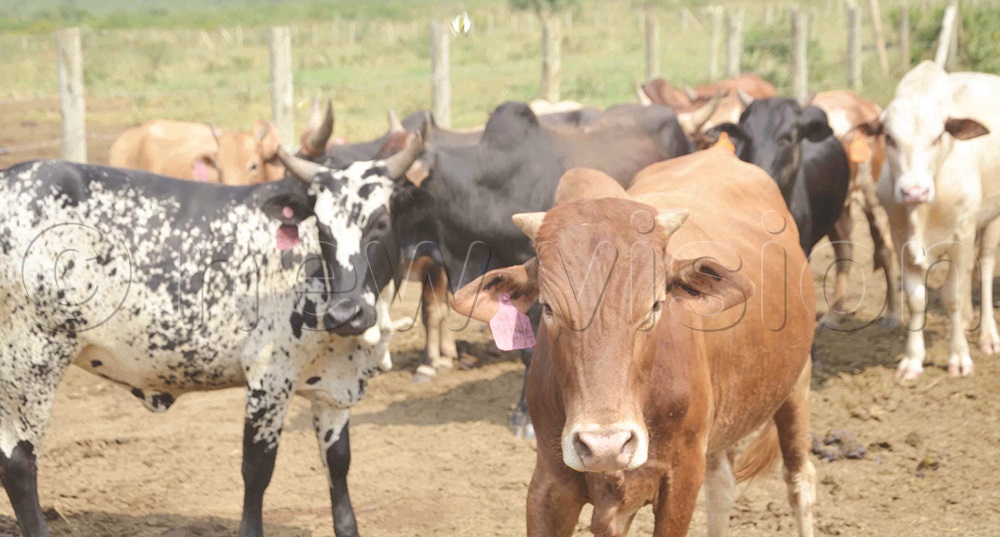
The National Agricultural Research Organisation (NARO) is in advanced stages of rolling out NAROVAC, a new vaccine developed to avert tick-related diseases in livestock.
According to NARO, Uganda loses sh3.8 trillion annually in the treatment of diseases transmitted by ticks to livestock.
Transmission results in anaemia, high treatment costs, production losses and low-grade products, thus loss of market and death of livestock.
The principal investigator, Dr Fredrick Kabi, says the effect locks Ugandan farmers in poverty.
When completed, the unit that is stationed at the National Livestock Resources Research Institute will produce above 20 million doses of anti-tick vaccines annually, enough to vaccinate all the 14 million head of cattle in Uganda today.
Other vaccine production lines in the pipeline include a foot-and-mouth disease vaccine.
Huge breakthrough
Dr Kabi presented NARO’s cutting-edge research during a journalists’ training session, with particular emphasis on the development and scaling of the anti-ticks vaccine.
The training, held at Gracious Palace Hotel in Lira city, was central to NARO’s efforts in supporting livestock health and boosting agricultural productivity.
He said acaricides had been used to kill ticks for over 100 years, thus a gradual loss of potency, causing environmental and food contamination, as well as death of non-targeted organisms.
Kabi said NARO had developed an efficacious vaccine against ticks that transmit fatal livestock diseases in Uganda.
“Mass production and roll out of the new vaccine, NAROVAC, will start in August,” he said, adding that infrastructure and core human resources are in place to support the process.
Dr Kabi said the vaccine product does not interfere with the normal physiological functions of animals.
He added that metabolite traces in the milk and faecal matter present no evident risk to the consumers and the environment.
Dr Kabi said the test product triggers anti-subolesin antibody production, which disrupts blood meal uptake. He added that the anti-subolesin antibodies further block oviposition and hatchability, thus disrupting the lifecycle of the tick.
“The vaccine has exhibited the ability to control multiple tick species,” Dr Kabi said.
He said the journey to develop the vaccine started in 2013 and that, as NARO, they are grateful to President Yoweri Museveni for his wise guidance and support of the process.
NARO, Kabi said, is also grateful to the Government, through the agriculture and finance ministries, for solely supporting the research and development of the vaccine, its evaluation, construction of the production facility and the commercialisation process.
Impact of ticks
Ticks affect 80% of the world’s cattle population and are associated with numerous health and economic effects.
The cattle tick, Rhipicephalus microplus, for example, is known to cause the greatest economic impact worldwide because of its broad distribution, vector capacity, blood-sucking habits and the proportion of cattle that it affects. The tick causes gross financial losses of approximately $13.9b-$18.7b (about sh49 trillion-sh67 trillion) per year worldwide.
The tick species reproduce and survive best in warm and humid climatic conditions. The Rhipicephalus genus has been introduced to diverse geographical regions around the world, being aided by its great adaptive and propagative capabilities.
Approximately one billion bovines graze at the risk of being affected by these ectoparasites.
A strong association between economic impact and the epidemiology of the diseases has been documented. The losses due to the ticks and tick-borne diseases complex can be classified as direct and indirect.
The direct economic effect on production results from damage caused by tick bites in heavily infested animals, blood loss in cases of heavy parasite loads, anaemia, severe allergic reactions due to toxins in tick saliva, chronic stress and irritation.
These alter the behaviour and welfare of the animals and lead to immune depression. Tick infestation also leads to a loss of energy directed to the constant movement that occurs in response. Indirect losses stem from the effects of tick-transmitted pathogens.
Other indirect losses include the cost of treatment, tick control costs, unearned income or inefficiencies in the production system, such as maintenance of genetically tick-resistant breeds which are less productive (lost potential), acaricide-contaminated animal products and trade restrictions between possible partners.
Therefore, ticks not only cause economic losses through direct mortality of high-grade animals, but also by hindering genetic improvement (productive potential) of entire herds.