For the tenth year running, Vision Group, together with the Embassy of the Netherlands, KLM Airlines, dfcu Bank and Koudijs Animal Nutrition, is running the Best Farmers Competition. The 2025 competition runs from April to November, with the awards in December. Every week, Vision Group platforms are publishing profiles of the farmers. Winners will walk away with sh150m and a fully paid-for trip to the Netherlands.
When the COVID-19 pandemic brought uncertainty, Dr Richard Wemesa saw opportunity.
He transformed his maize farm into a thriving agribusiness — Jolwe Farm — pioneering value addition in agriculture while empowering his community.
What began as maize farming has since expanded to include flour processing, poultry, piggery and more recently, dairy farming.
From academia to agriculture
Wemesa, a lecturer at institutions which include Makerere University, the University of Nairobi and the Uganda Institute of Banking Services, turned to full-time farming during the COVID-19 lockdown, when schools and universities were closed to curb the spread of the virus.

Wemesa explaining how he manages his maize. (Photos by Herbert Musoke)
“We had acquired 30 acres of land in Jolwe, Wakiso district before the pandemic. When the lockdown began in 2020, we decided to put the land to use and started growing maize,” he recalls.
Initially, they sold their maize to grain dealers in Kisenyi, Kampala. However, unpredictable maize prices soon became a challenge.
“When maize prices fell to as low as sh700 per kg, we had to think beyond grain sales. That is when we ventured into value addition,” Dr. Wemesa explains.
Venturing into flour milling
In 2021, Jolwe Farm invested in its first maize mill, imported from China. Unfortunately, the machine broke down within three months, leading to substantial losses.
“I didn’t give up. We replaced it with locally fabricated machines from Katwe, which we still use today,” he says.
Currently, the farm processes over 15 tonnes of maize daily, marketed under the Jolwe Flour brand. Clients include schools and other institutions.
To meet demand, the farm also sources maize from Kisenyi-Kampala, Mubende, Busoga region and other parts of Wakiso district.
“To maintain quality, we employ a quality control officer to inspect every consignment before milling,” Wemesa adds.
Turning waste into wealth
Flour milling produces bran and broken maize as by-products. In 2022, Wemesa saw another opportunity — piggery.
“We started with four gilts and three boars, each bought at sh220,000,” he says.

They now keep over 200 pigs, primarily large white and landrace breeds. For improved productivity, they crossbreed these with duroc boars, imported from France and South Africa.
“These crosses mature quickly and are ready for slaughter at four to five months,” he explains.
At that age, pigs weigh 70kg–100 kg and are sold for sh650,000 to sh1m. Piglets fetch sh100,000 at one month and sh150,000 at two months. Pork retails at sh15,000 per kilogramme.
Poultry: daily revenue
The poultry enterprise began in 2023 with 200 broilers. Today, the farm keeps 15,000 birds, including layers and kroilers. The majority are layers, producing 52 trays of eggs daily, each sold at sh10,000.
“We also stock 3,000 kroilers monthly and at three months, we sell them to traders at Kalerwe Market in Kampala for around sh18,000 each,” says Wemesa.
His wife, Rhoda Gloria Nafula, manages feed formulation. For poultry, they mix bran, broken maize and Koudijs concentrate. For pigs, they substitute Koudijs with feedless concentrate.
“We also employ a worker solely responsible for monitoring feed quality and mixing. This ensures the animals get nutritious feed and stay healthy,” she notes.
Dairy farming
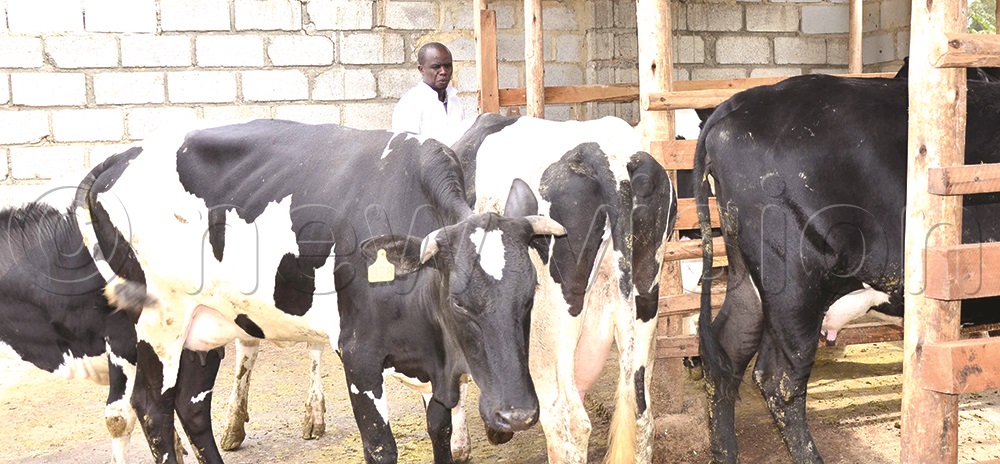
The dairy unit was launched in 2024 with the purchase of a Friesian heifer at sh1.6m. Today, the farm has 15 Friesians, with nine producing a combined 125 litres of milk per day.
This is supplied to dairies in Gayaza town at sh1,500 per litre. To support the unit, the couple rents an acre of land for growing pakchong napier grass and produces silage from maize stovers.
Security and biosecurity
All enterprise units — milling, piggery, poultry and dairy — are secured with chain-link fencing and gated access. In the piggery, access to breeding stock is limited to a few authorized personnel. Biosecurity is enforced through footbaths at each unit’s entrance, with disinfectant changed daily.

“We are cautious with visitors. Anyone entering must wear farm-issued boots and disinfect them. Prevention is always better — and cheaper — than treating a disease outbreak,” Wemesa says.
Labour force
Jolwe Farm employs 61 permanent workers, whose monthly salaries range from sh150,000 to sh500,000, depending on experience and role. In addition to salaries, the farm provides accommodation, meals and medical support.
During peak seasons, such as weeding and harvesting, they hire casual labourers who are paid sh10,000 per day.
Family involvement
Wemesa emphasises that the farm was established as a family business from the beginning. His wife, Nafula, is actively involved, particularly on weekends and during his busy academic schedule.
“Our children also help out — feeding animals, collecting eggs and cleaning the cowshed,” he says.
To nurture the next generation of farmers, Wemesa enrolled one of their children at Dr Emma Naluyima’s MST Junior School, which is known for practical farming education.
“She is already showing amazing skills. When she is home, it is clear she understands farming even better than I did at her age,” he proudly adds.
Wemesa’s long-term goal is to ensure that the children can take over the farm and elevate it further in the years to come.
Challenges
Despite its growth, the farm faces several challenges:
- Transport: Delivering flour to distant customers is a logistical hurdle. “We need more trucks to meet our growing market demands,” says Wemesa.
- Post-Harvest Handling: There is a need for improved post-harvest infrastructure, such as solar dryers and storage silos, to maintain grain quality.
- Skilled labour: A shortage of qualified machine operators often leads to equipment breakdowns and operational inefficiencies.
Future plans
With Uganda’s rapidly growing population, Wemesa believes building sustainable food systems through value addition is crucial.
“In the next five to ten years, we aim to expand Jolwe Grain Millers Limited into a nationwide brand. Our vision is to put quality maize flour on every Ugandan table and commit to ‘feeding future generations,” he says.
Good practices
Nafula says to ensure the business is run professionally, they recruited a qualified farm manager and an accountant.
These two staff members produce daily farm reports, which the couple reviews every week.
“We go through the reports weekly. This helps us assess the past week’s performance and prepare a work schedule for the coming week,” Nafula explains.
For effective financial management, each enterprise operates its own bank account to monitor performance independently.
“We have also made sure our personal expenses do not exceed our farm incomes. Additionally, we are both signatories on the accounts, which ensures transparency and prevents any misuse of business funds,” she adds.