279
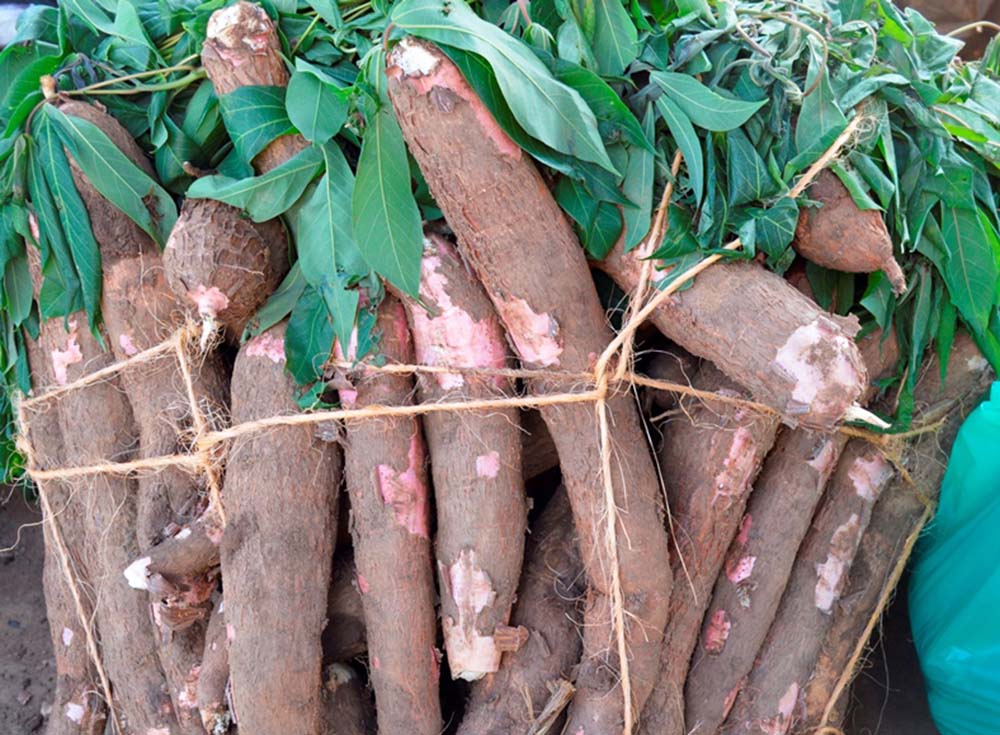
Cassava roots should be harvested at the peak of maturity or the right age, size and tenderness required for the fresh market (use of roots as a snack or home cooking).
Fully matured cassava roots should be harvested for processing.
Cassava roots may lose the valuable starch, rot or become woody if not harvested at maturity. They are exposed to rodents, and the land cannot be put into productive use in the next season if the roots are not harvested.
This contributes to the general agriculture outputs in smallholder systems and can cause shortage of land and increase production costs, especially in places where land is scarce.
- Harvest cassava roots when they are mature to have accumulated enough starch but have not yet become fibrous.
- The optimum age when the starch and dry matter yields are highest is 9 –12 months after planting, depending on the variety and the climate. Some varieties mature in 15 – 18 months. An extended cold season may delay the maturity of cassava.
- Harvesting too early results in a low yield, while delayed harvesting could reduce yield.
- Harvest cassava when the soil is slightly soft but has no excessive water so that you can easily remove soil from the roots. Harvesting in soft soil is easier than when the soil is harder. Roots harvested in soggy conditions get soil stuck between them and this can lead to inaccurate weight records. Also, the roots may be very dirty and highly contaminated when peeled, thereby requiring a large volume of water and an extended time to wash the peeled roots thoroughly.